[For details click on the images]
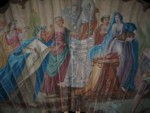
Fig.23 Sacrifice at the love altar, approx. 1730/40
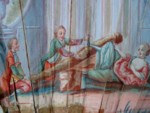
Fig.25 Accident on the see-saw (Thanks to Anna Checcholi for the permission to use her fan images)
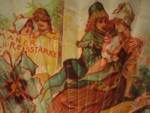
Fig. 27 Publicity fan for rice starch from Fiume (a cosmetic product), around 1900, Austro-Hungary
Eros & Amor: Love iconography on fans (5)
6.
Other love symbols
Fans, but also paintings, often show some attributes that may not have
an immediate meaning to the modern spirit, but were clear allusions
to love.
Altar of love: The love altar goes back to ancient
times and is often shown in a Greek context. Girls and women (sometimes
also men) sacrifice to the gods of love: Eros, Aphrodite or Hymen, the
god of marriage. The altar most often shows a flame (like burning torches,
a symbol of "burning love") or a stone figure depicting one
of the love gods. A variation is the "water sacrifice" where
a woman dressed in antique clothes empties a jar of water on the altar.
This was a favourite subject of classicistic and Biedermeier times (source:
Kunstlexikon P.W.Hartmann, see above).
Torches: Torches have a variable meaning, but are often
used in the context of friendship and love (crossed, burning torches).
Amor holds a torch accompanying Apollo or Eos/Aurora (the latter, goddess
of the morning, uses a torch to shy away night). Ceres/Demeter used
a torch to look for her daughter Proserpine. A torch without flame is
a symbol of death (or of dying love).
Love or friendship plinths: These stone pieces are
sometimes found in wild gardens (corresponding to the Rococo taste)
and have their origin in the love altars. They should not be confounded
with broken columns that are a sign of mourning.
Flowers, in particular roses: Symbol of love. The rose
was the holy flower of Venus/Aphrodite. (In Christian iconography it
symbolizes the virgin Mary). A flower wrath is a bridal symbol.
House or tower on an island: On the reverse of fans,
one often finds a lesser painting, depicting a house or a small tower
on an island. This is a symbol of marriage.
7.
Explicit Configurations
Overt erotic scenes on fans (like, for example, in the Far East) were
allegedly used on so-called "double entente" fans (fans that
open two ways). However, fan literature does not cover such fans, nor
do museums. Currently, while writing this article (2005/20060, two fans
appeared on the market, with explicit erotic scenes. One on a Spanish
"Corrida"-Fan: when opening the revers from right to left,
it unveils several persons engaged in love games. Another fan, dating
from aroung mid-18th century, shows an innocent enough painted leaf,
that might be read differently in relation to the ivory sticks: in the
centre, a "menage à trois" scene is carved. As both
cases show rather not so common erotic scenes, it may be that the fans
were purpose-made. In the first case, for guests of a brothel, in the
second, as a gift to one of the ladies involved (?).
Sometimes,
one finds more or less direct allusions (like in Ch. Kammerl, p.160:
"le marchand des billets de lotterie"), or on those fans with
question and answer games on it (late 18th century).
Fans with a Watteau or Fragonard motif appear for a nowadays taste harmless,
but were rather "piquant" in those days. One example is the
"accident" on a see-saw, where a lady falls
down, with spread legs – and reveals what is below her skirt! Considering
that underwear was restricted to a corsage and underskirts, the erotic
meaning is enhanced (very similar to Fragonard's famous "La Balançoire").
A similar effect is shown on a fan from the 17th century in "Autant
en porte le vent", Musée des Art Decoratifs Bordeaux, where
a thunderstorm at Marly brings an elegantly dressed lady to fall. She
loses her hat and her fan and reveals – naked ankles!
During
the second half of the 18th century, so-called pastoral or gallant scenes
are shown everywhere. However, they hardly ever are of a daring nature,
mainly showing shepherds and shepherdesses, or a couple in love, surrounded
by an idyllic-lonesome landscape. Nudes were restricted to mythological
scenes. This changes only during the second half of the 19th century.
The new World Exhibitions open the doors towards exotic countries and
spice the life of the "old world" in more than one sense.
Soon exotic becomes a synonym for erotic. Artists of the Arts and Crafts
movement ("Art Nouveau", "Jugendstil") as well as
later on Art Deco benefit from these new inspirations (see
Barbier fan).
At the beginning of the 20th century, publicity fans use exotic (and
erotic) motifs: the eternal woman in its beauty is the centre of many
a – successful - publicity campaign.
8.
Fans as token of love:
Since the second part of the 18th century, but especially during the
19th century, fans became an important gift to a bride, similar to jewels.
Fans owned by famous aristocratic women can be seen in the collections
of the Fan Museum (for example Stephanie of Belgium's marriage fan,
a present from her aunt and uncle, with more than 1500 rose diamonds
on the monture, 1881) or in the Bielefelder Fächerkabinett (for
example, fan for the marriage of Philippe Duc d'Orléans in 1897).
Simpler fans were handed out to bridesmaids in the "corbeilles
de marriage" ("wedding baskets"), that are decorated
with love symbols, sometimes also with the portraits of the bride and
the bride-groom.
As a token of adoration, the simple wooden fan shown in fig…. can be
seen as one of many. The most famous fans of love are probably those
painted by Oskar Kokoschka for Alma Mahler (1912-1914), with their own,
complex symbolism.
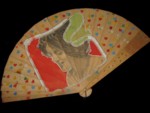
Fig. 29 Wooden Brisé fan hand-painted, signed "E.G. after a design by H. Christiansen, Paris", Austria, approx. 1900
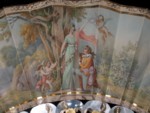
Fig.24 Adoration of the beloved one, Marriage fan, 1860
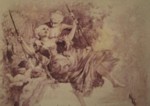
Fig.26 Pastiche in the style of Fragonards by P. Avril (in O. Uzanne, L'éventail)
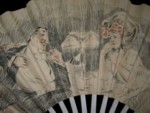
Fig. 28 Publicity fan for "Le rat mort", ca. 1907

