[For details click on the images]
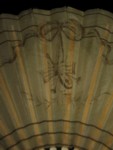
Fig. 15 Reverse of a Duvelleroy fan showing music instruments in a typical arrangement, approx. 1900
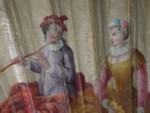
Fig.17 Romantic scene with flute player, France, approx. 1730/40
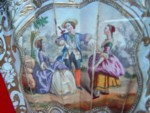
Fig.19 Trio with a lady with a distaff, approx. 1850 (Thanks to Anna Checcholi for the permission to use her fan images)

Fig. 21 Blindman's Buff, approx. 1855
Eros & Amor: Love iconography on fans (4)
5.
Games and Music
Until the early 18th century, fans were a prerogative of the upper classes.
One encounters court scenes on fans that refer to all kinds of "courteous"
entertainment. Depending on the period, they have to be interpreted
differently.
Music
instruments:
Already in Ancient Greece, music instruments meant different entertainments
and stood for different moods. Apollo's and Orpheus' poetic lyre stands
in strong contrast to the flutes of Satyr or Pan, or the percussion
instruments of the Bacchants. Medieval courting scenes (the ancient
Germanic "Minne") were always accompanied by playing an instrument
(harp, guitar) and singing. It was a preferred topic on fans until the
late 19th century. Since the late baroque, music instruments arranged
like trophies are symbols of a cultured life (Source:Kunstlexikon P.W.
Hartmann, www.beyars.com/kunstlexikon). As such, they are often found
on fans, in parallel to love symbols. At the same time, music instruments
may symbolize passionate love (as opposed to spiritual love; source:
"Götter und Helden der Antike", Berlin 2003). It depends
largely on the context in which music instruments are put. Take for
example the flute. By its form it is a quasi "natural" phallic
symbol. M. Kopplin (in Barisch, p.51, see Bibliography) calls it "lascivious
motive" and refers to Boucher's "L'Agréable leçon".
This significance is emphasized by a female player. "Le Curieux"
has an early 18th century fan for sale, where a female trumpet player
accompanies the "Roi amoureux". A similar connotation may
be ascribed to the Bagpipes. They appear often during the second half
of the 18th century, when pastoral or so-called "gallant"
scenes were en vogue (the bagpipe originally being an instrument of
shepherds and peasants).
Music scenes on fans of the "Biedermeier" (1820-1855 approx.),
on the other hand, are mere idyllic scenes without any erotic or love
connotation.
Spindle
and Distaff:
Similar to music instruments, spinning attributes may have a different
significance depending on the time of their creation. Spinning as such
is a female activity, thus, spindle and distaff personify the female
principle. Spinning women in the iconography of the 19th century are
home-and house-bound creatures, a positive character at the time. In
former centuries, aristocratic women engaged also in spinning, but for
amusement only.
However, the 18th century, and in particular the Venetian painting,
gave it a totally different meaning. In paintings by Pietro Longhi and
Francesco Guardi, spindle and distaff signify prostitution (source:
Filippo Pedrocco, Longhi, Ed. Giunti). Scenes that can be interpreted
as "gallant" show a woman with spindle and distaff, totally
out of context. This person sometimes exchanges a key against money,
or is shown in negotiation with a man. A good example for this interpretation
on a fan can be seen in "L'eventail - the collection of the Ostankino-museum
in Moscow", fig. 40. Scenes on fans sometimes show women with a
spindle and/or a distaff, together with a couple. Although not necessarily
an allusion to prostitution, it can mean that this person "helped"
in matchmaking. One fan leave shown in Salsi's "Ventagli di carta",
shows a young woman playing the piano, and an elderly woman in the background
holding a distaff. There is some evidence in the allure of both to identifying
the young one as a courtesan.
Blindman's
Buff:
This ubiquitous children's game was in former centuries a fashionable
entertainment at court, mainly played by adults. It goes by different
names in different countries, often abusing animals: In German "Blinde
Kuh" (blind cow); in Spanish "gallina ciega" (blind chicken);
in Italian "mosca ceca" (blind fly) and in Portuguese "caprita
cega" (blind goat). Its origin may be explained by its French name:
Colin-Maillard, and the English derivative. The rather mysterious French
name has a variety of interpretations. This is one that sounds most
probable: A knight from the region around Liège (nowadays Belgium)
named Colin was renowned for his courage. He fought each and every battle,
using a hammer ("maille" in French) and got nicknamed "maillard".
In one fight, he was blinded. Nevertheless, he continued fighting, hitting
around with his hammer (quoted after Michel Tournier, Le Vent Paraclet,
Folio Gallimard). Hence, blindman's buff in English, buff meaning "hit".
In former days (16th to 18th century), Blindman's buff was often played
with a cook's spoon (instead of a hammer): either to find and destroy
an earthen jug, or to hit the other players with it. Goya himself called
his famous painting "El cucharón" (cook's spoon) and
not, as described in later catalogues, "gallina ciega".
What is the erotic feature of this game? In times when etiquette did
not allow contact between the sexes, this game allowed for entertainment
together and served as a pretext to touch each other (sometimes at delicate
body parts, by the "blind" man!). The frequent use of this
topic in art (and on fans) shows its attractiveness, until the mid-19th
century. The often rather daring body language of the persons depicted
emphasizes the interpretation in the erotic way.
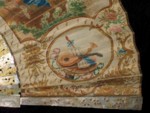
Fig. 16 Music instruments in the side medallions of the fan "Amor's lesson", approx. 1760
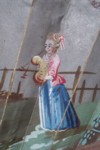
Fig.18 Female bag pipes player, approx. 1780
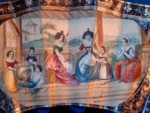
Fig. 20 Romantic spinning, approx. 1860 (Thanks to Anna Checcholi for the permission to use her fan images)
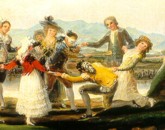
Fig. 22
Francisco Goya, Blindman's Buff, detail (Museo del Prado, Madrid)

